
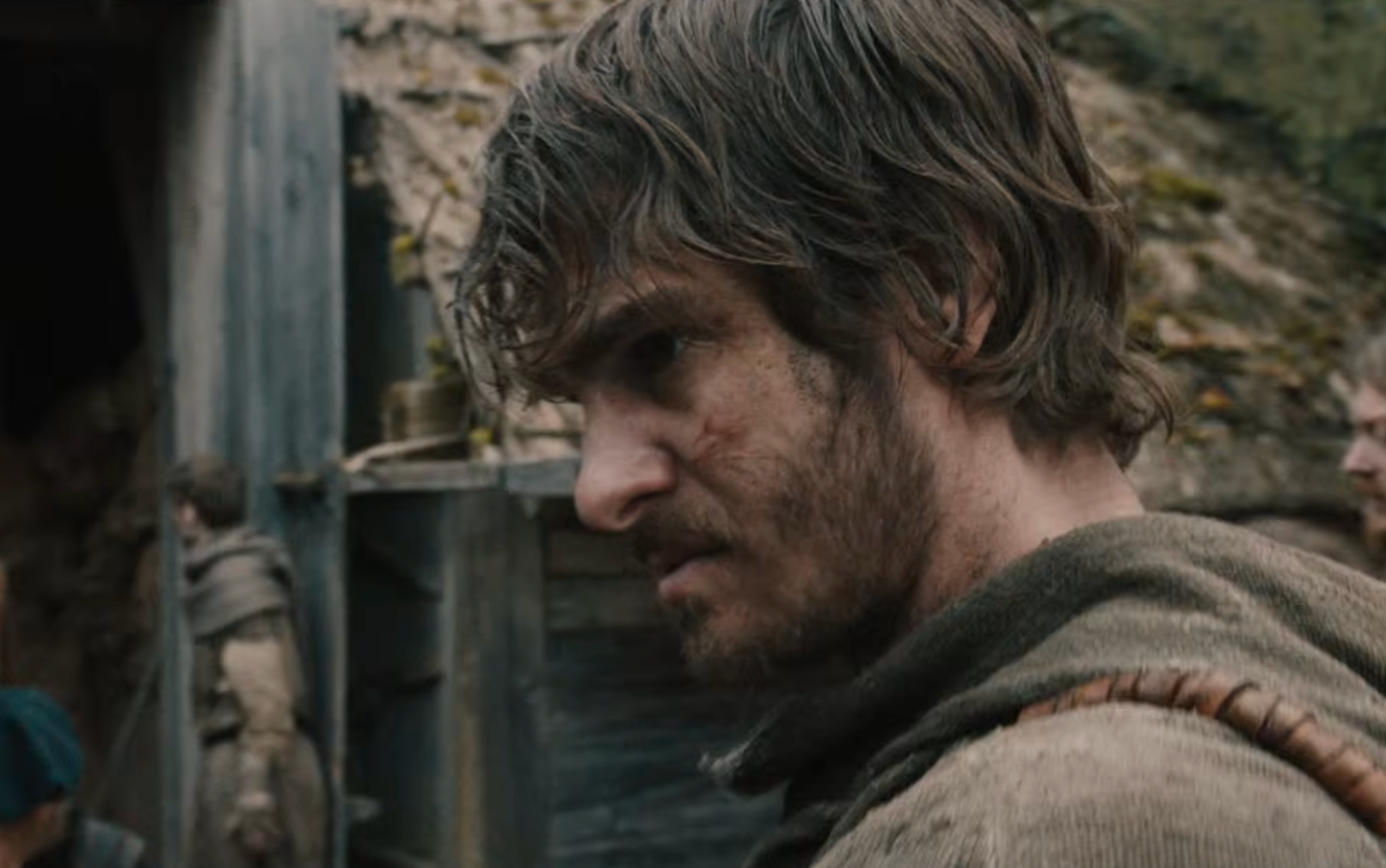

Based on the true story of the uprising that inspired the legend of Robin Hood, Andrew Garfield stars as the leader of a rebellion against the tyranny of King Richard II in a fight for justice.
There’s a feckless leader. Frustrated citizens, survivors of a global pandemic. The elites devising ways to hold on to their money by taking advantage of the poor and underprivileged. Zealots taking advantage of the common people’s infuriation. Any of this sound familiar? Paul Greengrass (United 93, Captain Phillips, The Bourne Supremacy and Ultimatum) wrote The Uprising in the midst of our Covid 19 drama and the allegories to modern day life aren’t subtle, nor do they need to be. History repeats itself and all that.
The Uprising retells the story of the Peasants Revolt of 1381 in England, a violent rebellion against the oppressive regime of Richard II, a young king under the thumbs of his greedy advisors. Ploughman (Andrew Garfield) is your average, everyday farmer who lost his entire family in the plague and gets fed up when the government demands even more him and his neighbors just struggling to get by. He gets pulled into the rebellion by former soldier Wat Tyler (Cosmo Jarvis) and religious leader John Ball (Jamie Bell). While Ploughman was created for the movie, Ball and Tyler are real historical figures.
Ostensibly, the movie is about rage. Greengrass even said the original title was simply the Rage, but that might’ve too on the nose. But as we’ve seen time and again, you can only push someone down so far and for so long, before they push back. Garfield is great at balancing that rage while also highlighting his everyman character getting pulled into the missions of louder men, which is also something we see happening quite often.
Bell and Jarvis are also strong as is Woody Norman as the egotistical young King. The frustration is palpable throughout and the movie zips along taking unexpected turns. Greengrass’ penchant for extreme realism makes the fight scenes feel raw and visceral, but the movie almost never takes a breath to get to some true character moments. It’s still an intense film that relishes in its connections to modern day.
Jonathan’s grade – B

We attended the American Cinematheque screening at the Aero theater with writer-director Paul Greengrass doing a Q&A afterwards. It was great to hear Greengrass’ thoughts on the creation of the film and the smaller budget they were dealing with, which isn’t evident at all on screen. It looks great.

Greengrass also talked a lot about the legend of Robin Hood and how he was born out of the mythology and lore surrounding the Peasants Revolt. The allusions to Robin Hood are present in the movie, especially visually, but the movie isn’t trying to be an origin story even if the marketing might lean into that.

Greengrass also showed how much more engaged other countries are in American politics, even if the opposite is seldom the same.
A great discussion hosted by Pete Hammond from Deadline.

Leave a Reply